

posted 20th October 2026
From grab-and-go commuter essentials to cocktails on the Thames, what does it take to get your food and drink products listed in one of London's most unique travel environments?
At TickEat, we're always looking to uncover what travel and leisure buyers really want from their F&B suppliers.
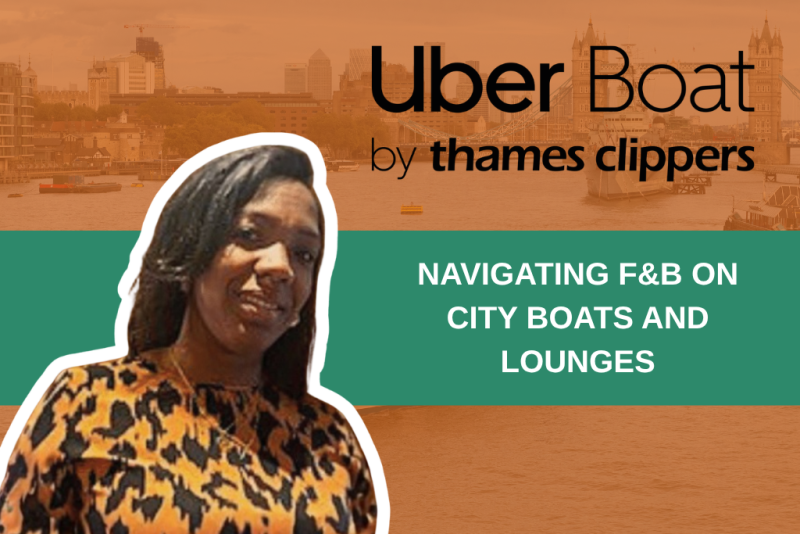
This time, we caught up with Tameika Wulff, Director of Retail and Onboard Services at Uber Boat by Thames Clippers, to explore the realities of F&B on London's river transport network, the trends shaping passenger demand, and what suppliers need to know before approaching the business.
With a customer base spanning daily commuters, international tourists, families and evening concertgoers, Uber Boat by Thames Clippers presents an exciting opportunity for food and drink brands. But successfully entering this environment requires more than simply having a great product.
One River, Many Different F&B Occasions
Unlike traditional hospitality venues, Uber Boat by Thames Clippers caters to passengers with very different reasons for travelling, and their purchasing habits reflect that.
Morning commuters prioritise speed, convenience and value for money, making coffee, pastries and breakfast deals particularly important. By midday, the customer mix shifts towards tourists, families and leisure travellers, with demand growing for refreshments, snacks and sandwiches. Come evening, concertgoers and leisure passengers bring another shift in demand, particularly towards alcoholic beverages.
The sales figures might surprise you
According to Tameika, alcohol is one of the strongest-performing categories onboard, with Peroni among the leading products. Water is also a standout seller within the soft drinks category.
Passenger purchasing habits also change considerably throughout the day:
Morning until 10 am: Hot drinks and pastries lead the way
10 am to 4:30 pm: Stronger demand for soft drinks, alcoholic beverages and snacks
Late afternoon and evening: Continued demand for drinks, particularly among tourists and leisure travellers
For suppliers, the message is clear: understanding the passenger occasion is just as important as understanding the product itself.
A protein bar designed for a morning commuter and a premium ready-to-drink cocktail aimed at evening leisure travellers may both have a place onboard, but they serve entirely different needs.
The Biggest Challenge? Making F&B Work on a Moving Vessel
A product that performs brilliantly in a café, supermarket or hotel might not necessarily work onboard a boat.
As Tameika explained, the operational environment creates unique requirements that suppliers must consider from the outset. Everything needs to be ready to eat or ready to drink. Safety is paramount, particularly when serving hot beverages, while packaging must be practical for consumption on a moving vessel.
Space is another major consideration. Products need to fit within the limited storage and retail areas available onboard, without creating unnecessary complexity for staff or passengers.
Innovation Is Welcome, but Proven Favourites Still Matter
How does a travel operator introduce exciting new brands without disrupting established customer favourites?
For Tameika, it's a constant balancing act. Uber Boat by Thames Clippers reviews its product performance quarterly, assessing what's selling, what could be improved and which emerging trends are worth exploring.
Regular commuters, in particular, can be loyal to specific products, making it important not to remove popular lines simply for the sake of introducing something new. However, the team remains open to innovation throughout the year.
One category currently catching Tameika's attention is matcha, with the team exploring drinks that could work within the onboard environment.
Other trends on the radar include:
- Protein-enriched food and drink
- Collagen products
- Plant-based and vegan options
- Innovative ready-to-drink beverages
But there is an important distinction between identifying a trend and finding a product that will actually sell. For suppliers hoping to enter the travel market, innovation needs to be backed by a clear understanding of the operator's customers and practical requirements.
How Do New Products Get Trialled Onboard?
For suppliers, understanding how a buyer tests new products can be just as valuable as knowing what they're looking for. At Uber Boat by Thames Clippers, trials are tailored to the type of product and its intended customer.
Tameika explained that the shortest trials have typically lasted around six weeks, allowing the team to gather meaningful performance data before making a decision.
Depending on the product, a trial might be introduced across the entire fleet or concentrated on a particular route. For example, the RB6 western route has a stronger commuter customer base, making it an ideal testing environment for products aimed at regular morning travellers.
Where appropriate, the team prefers to assess products across multiple vessels to understand their wider potential. And while quarterly reviews provide structure, suppliers don't have to wait for a specific buying window to get noticed.
"If the product works, and it's something we think will work on board, we will put it on board."
Sustainability, Free-From and Healthier Choices: What's Actually Working?
Changing consumer expectations around health, dietary requirements and sustainability are influencing onboard ranges, but not every trend translates into commercial success. Tameika shared several examples of products and categories that have performed particularly well.
One success has been Prime Time Beer, a gluten-free beer that was initially trialled before earning a longer-term place in the range thanks to positive customer response.
For an operator where passengers are primarily travelling rather than visiting specifically to eat, getting this balance right is essential. Food waste, shelf life and realistic sales volumes all need to be carefully considered.
Beyond the Boat: A Different F&B Opportunity at Clipper Lounge
Not every opportunity with Uber Boat by Thames Clippers is limited to onboard retail. Its Clipper Lounge offers a very different type of hospitality experience.
While the average passenger journey onboard is around 20 minutes, the lounge is designed to encourage customers to stay, unwind and enjoy the surroundings.
Opening from 11 am, the lounge's offering includes hot drinks, pastries, afternoon teas, cocktails, beer and wine.
Tameika also revealed plans to expand its light food offering this year, with the business taking a gradual approach to developing its food proposition. Private hire provides another occasion for hospitality and F&B.
For suppliers, this opens the door to different categories and formats that might not necessarily suit onboard consumption.
What Does Uber Boat by Thames Clippers Look for in a New Supplier?
Having a great product is only one part of the equation. When we asked Tameika what she looks for when considering a new F&B supplier, several important factors emerged.
- 1. A product that fits the environment
Can it be stored, served and consumed safely and conveniently onboard? Is the packaging appropriate? Does the format make sense for the customer?
- 2. A practical route to market
Suppliers need to consider whether they're already working with the operator's existing wholesalers, whether an alternative distributor would be required or whether direct supply is feasible. The ability to supply into London is another important factor.
- 3. A commercially competitive proposition
Tameika also considers where else products are stocked, particularly when major supermarkets near boarding points may offer the same brands at different price points.
- 4. A credible approach to sustainability
Sustainability remains an important part of supplier evaluation, alongside product performance and operational suitability.
- 5. Flexibility and marketing support
Perhaps one of the most interesting insights from our conversation was the importance of what happens after a product is listed.
Tameika wants suppliers who are enthusiastic about building awareness and actively supporting sales. That could mean providing point-of-sale materials, collaborating on promotional campaigns, arranging onboard activations or working with the operator's marketing team.
How TickEat Helps Bridge the Gap Between Suppliers and Travel Buyers
When we asked Tameika how TickEat has supported her sourcing process, her response reinforced exactly why we do what we do.
"You've understood the assignment to a T."
She explained that TickEat's understanding of travel-specific requirements helps ensure the products reaching her team have already been considered for practical suitability. From storage space and packaging sizes to how passengers consume products, these early conversations can save buyers significant time.
Tameika also highlighted the value of TickEat's ongoing communication and quarterly Buyer Boxes, which allow her team to discover and evaluate new products.
"I just feel as if you've made my area of work so much easier."
For suppliers, this is the value of working with a partner who understands both sides of the buying process.
Uber Boat by Thames Clippers has been a valued participant at TickEat events over the years and will be joining us again at our flagship Meet The Buyer and Marketplace event on 28–29 October 2026 at Arena MK, Milton Keynes.
Your next listing could start with one conversation. Explore TickEat's Meet The Buyer Event →