

“May Contain Glass”: Why Travel SPMLs Need a Safety Reset and a Smarter Commercial Model
posted 11th February 2026
Special meals (SPMLs) used to be treated like an operational side-quest: a few codes, a separate prep area, a polite “we’ll do our best.”
That era is ending.
In our conversation with Marc Warde, founder of two special dietary meal brands (Libero Special Meals + Cub Food), and Global Special Meals Program Director at Foodcase International, one message came through loud and clear:
Travel SPMLs are no longer a “special request.” They’re an expectation, and for allergy passengers, they’re a safety-critical service.
And the industry’s current approach (shared kitchens, “friendly” labels, inconsistent onboard handling, minimal ingredient visibility) is colliding with rising demand, higher consumer literacy, and growing legal scrutiny.
The core difference: hospitality risk vs travel risk
Marc put it plainly: most airline meals are still produced in general kitchens, with a side zone for free-from which keeps cross-contamination risk in play.
And in travel, that risk compounds because the “chain” doesn’t end at the pass. It continues through:
- packing and transport
- uplift
- onboard storage
- reheating
- service
- passenger handling
Marc’s view is uncompromising:
In 2026, no airline kitchen should be producing its own allergy meals for allergy passengers unless it has truly segregated facilities, it’s too risky. One line from Marc should be pinned in every SPML briefing: “Would you eat something that said may contain glass?” Of course not.
But when a meal is labelled “may contain” (precautionary allergen labelling), that’s effectively what we’re asking allergy passengers to do. They are misguided in potentially accepting uncertainty where the consequence could be life-threatening.
Food regulators warn that “may contain” is meant to help consumers make safer choices, but it’s also voluntary, inconsistent, and easy to overuse. And Codex has been actively working on allergen labelling and guidance for precautionary allergen labelling because of the global inconsistency problem.
This is why Marc strongly rejects vague menu language like:
“gluten-friendly”
“vegan-friendly”
“allergy-friendly”
“Low-gluten”
For allergy customers, “friendly” or “low” creates a grey area, and grey areas are where incidents happen.
The empathy gap (and why training alone won’t fix it)
Airlines and caterers often respond with more training. But Marc’s point was sharper:
“You cannot teach empathy.”
High turnover in both catering units and cabin crew makes consistency difficult. Even with protocols, the reality onboard is often messy: time pressure, service flow, competing priorities.
Marc described the standard “kit-form special meal” protocols (heat on upper shelves, serve first, wipe-down before other service), then delivered the hard truth:
Cabin crew won’t always do it.
So, the safest solution can’t rely on perfect human execution every time.
The “allergen-guaranteed box” solution: design safety into the system
Marc explained the approach they use for allergen-guaranteed meals:
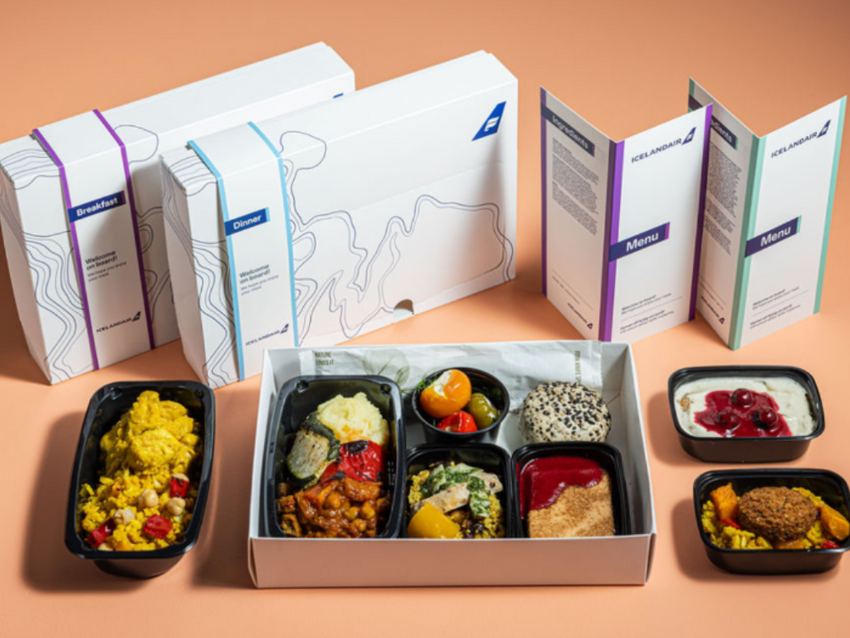
- The meal arrives in an allergen-guaranteed box, similar to a kosher sealed box
- Crew opens the outer box and presents it
- The hot component is separately sealed, and the passenger unseals it
That’s not just packaging. That’s risk engineering: it reduces touchpoints, reduces handling variability, and makes the chain of custody more defensible.
Yes, it looks different on a tray, but it’s built for what allergy passengers actually need: control and certainty.
Image: Icelandair is using the Libero Allergen Guaranteed Special Meals solution
Ingredient visibility shouldn’t disappear at 36,000 feet
Another shocker: even frequent flyers who know to ask aren’t always given full ingredient data onboard.
Marc’s stance: no allergy meal should be served without full ingredient and allergen declarations, and ideally, this should become a legal requirement.
This matters because the passenger group most likely to read labels in everyday life is the same group most likely to be handed a tray marked only “GFML” or “LFML” in-flight.
Kids: the biggest unmet SPML demand in travel
Marc called kids an “almost forgotten” category: airlines often focus on entertainment partnerships and branding, not allergen safety. But demand is real and growing.
UK and international estimates vary by method, but credible sources consistently place paediatric food allergy prevalence in the single digits. For example, 3–6% of children in developed countries (Allergy UK), and higher in certain age bands and datasets. According to a 2023 study published in the Journal of Allergy and Clinical Immunology, food allergy affects approximately 1-10% of the global population.
Translation for suppliers and operators: this isn’t niche. It’s a mainstream passenger need and a major opportunity for F&B suppliers.
SPML isn’t just about “free-from”, it’s modern nutrition and better design
Marc also made an important distinction:
Allergy ranges should be streamlined (fewer codes, fewer chances to mis-pick and mis-serve)
Dietetic and lifestyle SPMLs can expand (macro-aware, lower-calorie, functional long-haul meals)
From a product lens, this is where innovation wins:
- meals designed to help passengers feel better on long-haul
- transparent macros and nutrition information
- modern dietary patterns treated as legitimate demand, not “edge requests”
The commercial opportunity nobody says out loud: passengers could want to pay for safety
Here’s the part the industry tends to dodge: special meals cost more to do properly (segregation, testing, traceability, packaging, training, auditing).
People with serious allergies already live with an “allergy tax” in restaurants, in retail, everywhere. And many would rather pay more and be safe. Marc explains that he’d happily pay extra for a guaranteed safe meal that does not compromise on taste and quality.
That creates a shift, suppliers should pay attention to the SPML “cost” problem can become a value proposition.
What this means for F&B suppliers and travel operators
If you’re building SPML programs for 2026+, here are the takeaways:
- Step one Stop relying on “friendly” language: It is not a safety standard. Gluten-free is a legally protected term.
- Step two Design out human variability: Sealed, controlled service models beat “perfect protocol compliance.”
- Step three Make ingredients visible by default: Especially for allergy-coded meals. Allergen law of the land applies where the aircraft is registered.
- Step four Streamline allergy SKUs; innovate in dietetic/wellness: Reduce risk, increase relevance.
- Step five Treat kids’ allergen-safe meals as a growth category: Demand is there, supply is behind.
Join us: MTB: SPML Travel Edition (July 2)
This shift is exactly why TickEat is bringing the industry together for MTB: SPML Travel Edition on July 2.
If you’re a travel operator, caterer, or supplier working on SPML strategy, this is where innovative supplier offerings in the Special Meals sector will meet with travel operators and buyers ready to make real change towards passenger safety, inclusivity, and satisfaction.
Together, we want to raise the standard safely, commercially, and at scale.