

Liberating In-Flight Retail: A Conversation with Mihai Cucu, Founder of neonectar

posted 27th November 2025
Few people understand the inflight retail ecosystem like Mihai Cucu, founder of neonectar. His career has spanned customer experience, cabin operations, commercial retail, and digital transformation across major airlines and global catering partners. After leading one of the industry’s largest retail tenders (exceeding €1B at gateretail) and reshaping the profit per head model at Wizz Air, Mihai now focuses on a mission that many airlines talk about, but few know how to execute: liberating in-flight retail through AI and democratized data. His work targets emerging airlines operating up to twenty aircraft, a segment that requires the same outsourced buy-on-board capabilities as major carriers but is routinely excluded because the customer-acquisition costs of large retailers make them commercially unviable.
In our conversation, Mihai shared how decades of frontline and strategic experience have shaped his philosophy, what airlines truly value today, and why the future of inflight retail hinges on real-time relevance, operational efficiency, and data-enabled crews.
A 360º View of the Retail Ecosystem
Early in his career, Mihai worked customer-facing roles. Later, he moved into commercial strategy, digital transformation, and global retail procurement. This end-to-end exposure from the cabin to the boardroom shapes how he now approaches onboard retail.
“It gave me a 360-degree understanding. I now fully recognize every touchpoint and the impact of every decision, from product selection and gramage to sustainability, wastage, operations, and workforce.”
This holistic view is rare in airline retail. Decisions are often made in siloed departments without accounting for operational impact, crew practicality, or the real economics of the cabin. Mihai argues that the only way to make consistently profitable decisions is to consider every data point, not just the commercial ones.
What Airlines Really Value Has Changed
While leading one of Europe’s largest tender processes at gateretail, Mihai witnessed a major shift in airline priorities. Profit still matters, but it is no longer the only metric. Airlines now evaluate retail partners based on:
1. Sustainability
Packaging innovation, waste reduction, and circularity are influencing product selection more than ever.
2. Social Contribution
Airlines want to partner with emerging brands and local producers rather than only global giants.
3. Differentiation and Storytelling
Carriers want products that elevate brand perception, create marketing moments, and differentiate their onboard offering.
He gives an example about curating an International Delicacies section that lets passengers “taste Jordan” or “try the Taste of the Netherlands” through carefully chosen FMCG products.
“Airlines are realizing that product ranges cannot be purely commercially driven. They need strategy products, items that elevate the brand even if they are not the top sellers.”
This shift is creating space for innovation, niche brands, and cross-industry product adoption accelerated by AI-driven insights.
Why Trends Arrive Late and How Data Can Fix It
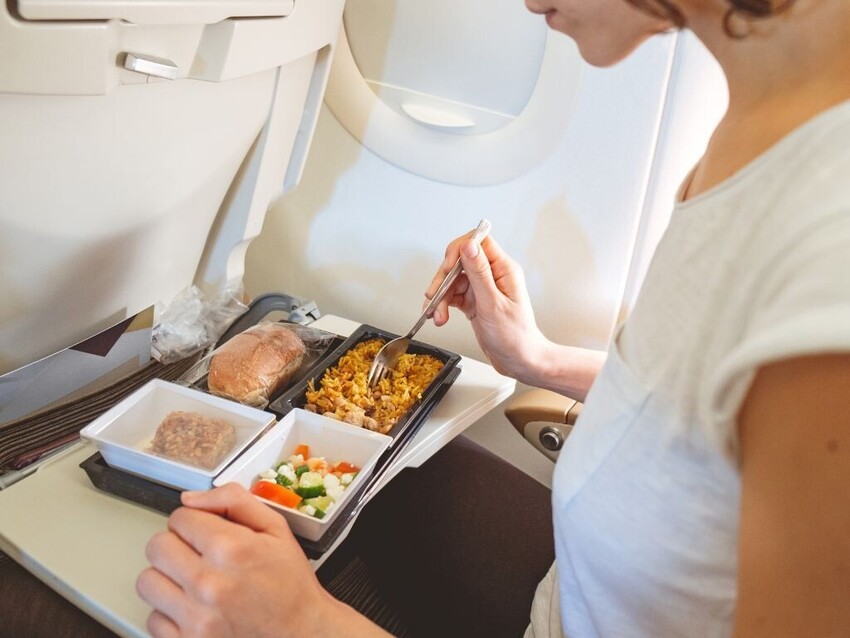
Food and beverage trends typically enter the airline market one to two years after they have peaked in retail. The reason is a mix of operational risk, aircraft limitations, and lack of demand visibility.
But airlines are waking up to the power of relevance as personalisation. Rather than guessing which trends will convert, they can now:
- Map product relevance to route, time of day, distance, and load factor
- Track variability in buying behaviour across demographics
- Identify where a product will resonate before listing it
This transforms trend adoption from risky experimentation to data-backed relevance.
Empowering Crews with Data
One of the most overlooked parts of inflight retail is the cabin crew. Mihai believes the future crew role will shift dramatically.
“Give crew the tools they need, then raise expectations. The future crew member is less a salesperson and more a fulfillment specialist.”
He envisions a model where the cabin crew:
- Receives clear, automated prompts for heating, preparing, or loading products
- Fulfills customer orders triggered by seatback or mobile ordering
- Benefits from dynamic menus and data-led suggestions
- For brands, it means products can finally be served consistently.
- For airlines, it unlocks new commercial levers.
- For crew, it reduces stress and increases confidence.
The Levers Behind Profit Per Head and Their Cross-Modal Potential
During his time at Wizz Air, Mihai helped redefine the PPH (profit per head) model, much of which can translate directly to the rail and cruise sectors.
1. Wastage Management Through Big Data
A predictive algorithm determined the optimal number of units per flight. This reduced wastage dramatically while increasing profitability.
2. Dynamic Range Adjustments
Post-pandemic behaviour shifted quickly, so Mihai’s teams increased the frequency of menu updates to mirror customer demand.
3. Flex Range
A rotating experimental range introduced periodically, usually every two months. It enabled trial without long-term commitment, gave small brands a platform, and boosted passenger curiosity and urgency.
4. Multi-Day Barsets (Operational Breakthrough)
One of the industry’s most impactful operational innovations. Instead of reloading every aircraft daily, Mihai’s team engineered a multi-day bar set strategy by analyzing shelf life, base performance, and sales velocity.
“It created a complex operational matrix but reduced costs considerably without compromising availability.”
This model is highly applicable to rail and cruise retail environments where frequency, loading constraints, and dwell times differ.
5. Dynamic Pricing: The Untapped Frontier of In-Flight Retail
Dynamic pricing remains one of the most exciting yet least utilized opportunities in onboard retail. Importantly, this capability is only feasible when customers order digitally through in-seat channels such as QR codes or mobile devices. When prices are printed in the onboard magazine, they are fixed for the duration of the flight, which removes the ability to adjust them dynamically.
Within the digital environment, however, airlines can explore three layers of dynamic pricing for in-seat mobile ordering:
1. Static Dynamic Pricing (Preloaded)
Prices adjust based on route or time of day, preset by the airline.
Example: Morning flights receive a coffee and croissant bundle discount.
2. Semi-Live Pricing (Rule-Based)
The system uses historical data to decide if and when certain activation points should trigger promotions. This is not guaranteed. For example, if the system recognizes that the target of selling ten units of a product by a certain time is not being met, it may activate a promotional price.
3. Fully Live Dynamic Pricing (The Endgame)
Prices adapt in real time based on:
- Remaining inventory
- Route profitability
- Time to destination
- Customer behavior
- Weather delays or extended flight times
This creates flash deals, route-specific promotions, and demand-driven pricing similar to modern ecommerce. However, Mihai stresses the importance of customer perception:
“Dynamic pricing depends on the airline’s commercial appetite. You can use it purely to benefit passengers, lowering prices at the right times, creating demand, without ever increasing them.”
No airlines are currently deploying full-scale dynamic pricing. The technology exists, but the commercial will and infrastructure are not yet in place.
The Future: Democratized Data and AI Equal Freedom for the Retail Ecosystem

Across every topic, Mihai returned to one core belief:
“You cannot make a big change without technology. You can optimize everything you have today, but to leap forward you need AI and democratized data. And by democratized data I mean removing the retailer-controlled silo, enriching the datasets, and creating continuous pipelines of shared information that reveal correlations, feed decision-making, and strengthen the airline’s business rather than the retailer’s private database.”
This means:
- Data must sit across teams, not locked within a single supplier
- Airlines must understand demand, crew behavior, wastage, route segmentation, and product relevance within one cross-functional ecosystem
- AI must shift from buzzword to backbone
This is where neonectar comes in: to liberate inflight retail from guesswork and inefficiency and replace it with relevance, automation, and passenger-centric intelligence.
Closing Thoughts
Mihai Cucu sits at the intersection of experience, operations, technology, and brand understanding. His vision for democratized data and AI-led retail is not theoretical; it is shaped by years of building the systems, models, and strategies airlines still use today.
For airlines, suppliers, and brands, embracing this future means:
- Higher profitability
- Reduced wastage
- Empowered crews
- Delighted passengers
- Product ecosystems that evolve as quickly as consumer trends
The travel retail industry is on the edge of a transformative shift. With leaders like Mihai driving change, the next era of onboard retail is not about selling more. It is about selling smarter.
Mihai is a committee member at Navigate The Travel Forum. Navigate was founded earlier this year to provide a central, trusted platform where both suppliers and buyers can stay informed, inspired, and future-ready. It’s an opportunity to step back from day-to-day demands and gain a broader view of the market, grounded in real-world perspectives from industry leaders.