

You Got the Listing. Now, How Do You Keep It?
posted 16th April 2026
Winning a spot on an airline menu is a major milestone, but keeping that listing is where most brands fall short. Here is what separates the products that stay onboard from the ones that quietly disappear at the next menu review.
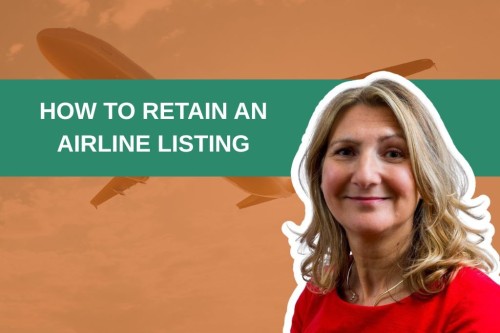
We sat down with Zoe Farmer to understand what it really takes to succeed in airline retail.
Zoe has worked in the food industry for over 25 years, with six years of experience specifically in airline catering. She brings a rare dual perspective, having worked on both the supplier and airline side.
During her time at gateretail, she held the role of Global Director for Retail Management, working closely with suppliers and understanding the commercial realities of getting products onboard. Today, she is a consultant currently supporting IAG with specific projects for both airline retail programmes and Catering.
This breadth of experience gives her a clear view of what both airlines and suppliers need to successfully launch and retain products onboard.
The pitch ends. The performance begins.
Most F&B suppliers pour enormous energy into securing that first airline listing. The decks, the samples, the negotiations. But winning the listing and retaining it are completely different games.
As Zoe Farmer explains, the moment a supplier is listed, one metric becomes everything: rate of sale.
She notes, “Rate of sale would determine whether that product would stay on board the aircraft or not.”
Space onboard is finite and fiercely competitive. Airlines want the highest-performing products they can get. Your goal from day one is to prove your product deserves that space and to keep proving it.
Your listing survival checklist: the first six months
The first six months after a listing are critical. Zoe outlines four pillars every supplier should have in place from launch:
A strong relationship with your account manager
Whether airline or catering retailer, this relationship is key to understanding how your product is being perceived onboard.
A flawless supply chain
Zero disruptions, consistent availability, on time, every time.
Crew incentives and engagement
Cabin crew are your inflight sales force. Make them advocates.
Active marketing
Brochures, inflight visibility and clear communication that the product exists to the passenger.
Build feedback loops early
One of the most overlooked advantages in airline retail is access to real-time insight.
Suppliers who succeed do not wait for quarterly reviews. They actively gather:
- Crew feedback on ease of selling and handling
- Customer feedback on taste, value and appeal
- Performance data to understand what is really happening onboard
- If something is not working, you need to know quickly and act faster.
Build feedback loops early
One of the most overlooked advantages in airline retail is access to real-time insight.
Suppliers who succeed do not wait for quarterly reviews. They actively gather:
- Crew feedback on ease of selling and handling
- Customer feedback on taste, value and appeal
- Performance data to understand what is really happening onboard
If something is not working, you need to know quickly and act faster.
Spot the decline before it is too late
The main reason suppliers lose listings is not dramatic. Sales simply drift downwards until the product can no longer justify its space.
By the time the listing is gone, the conversation is much harder to reopen.
Zoe highlights the importance of acting early: “It is much harder to get on board once the listing has been lost than during the period of decline.”
If you start to see sales falling, ask the hard questions:
- Is packaging damaging the product in transit?
- Is pricing putting passengers off?
- Is it too niche or polarising?
- Is it difficult to open onboard?
- Is crew awareness low?
- Is your marketing visible enough?
A proactive marketing campaign or crew incentive push during a dip in sales is far more effective than trying to win back a listing from scratch.
The operational details that protect your listing
Airline catering is unlike any other retail environment. Products are loaded in one country, sold on another continent and sometimes returned. That complexity puts enormous pressure on how a product is packaged and handled.
Zoe highlights packaging as one of the most underestimated elements of success:
- It must survive the full supply chain without damage
- It should minimise handling at the caterer level
- It must be easy to open onboard without breaking the product
- It should be clean and mess-free for passengers
Even small inefficiencies can cost you your listing.
How great suppliers keep relationships warm
Once the listing is running smoothly, the biggest risk is complacency. Great suppliers treat the airline like a strategic account and invest in it continuously.
They share new product developments early. They highlight success in other channels. They offer exclusivity. They check in regularly and invite feedback.
They also understand the growing importance of sustainability, while recognising that its weight in decision-making can vary by airline and must still align with cost realities.
As Zoe Farmer explains, what separates suppliers is not just product performance, but consistency across the entire journey:
“A good supplier is good through the whole supply chain. You might have a fantastic cost price and it might sell brilliantly, but if you do not have availability, that becomes a problem. The full journey of the product is critically important. Every step needs to work. If you cannot get the product, even if it sells well, that is not very helpful.”
Ready to get in front of airline buyers?
TickEat connects F&B brands directly with the airline buyers who decide what goes on board. More importantly, we help you understand what it takes not just to win a listing, but to keep it.
If you want your product to fly and stay there, join us at our next event.